
By Dr. Tiffany N. Younger | January 2026
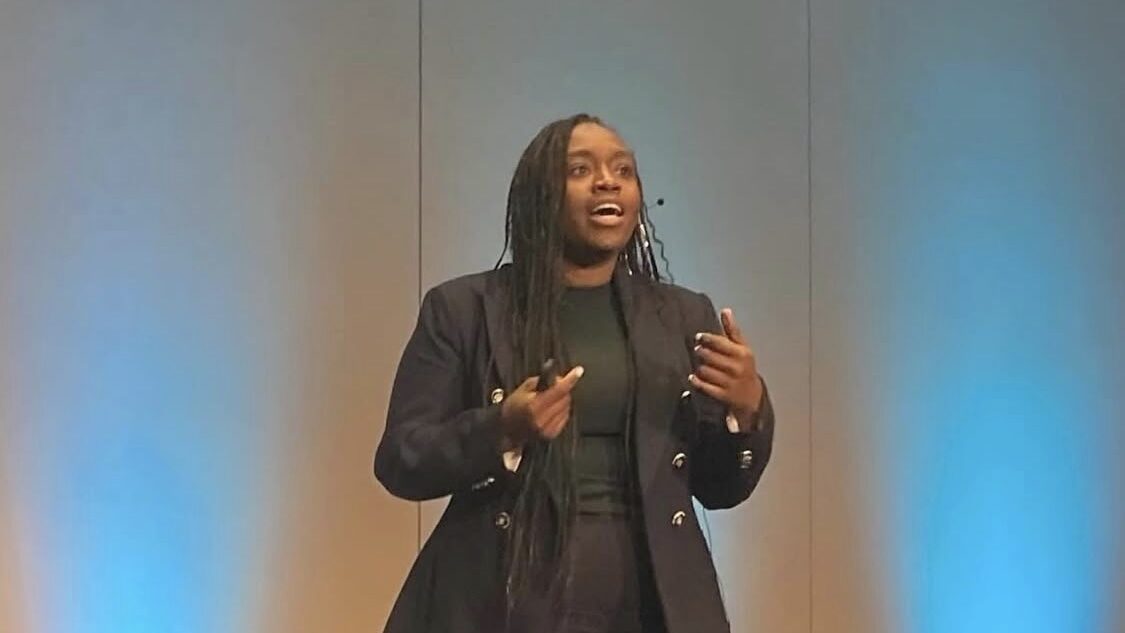
When people ask me why I’m drawn to Baby Bonds research, I often think about my childhood. I think about how in a nontraditional way, I have received a form of a baby bond. At the age of three, I lost my thirty-two year old biological mother to kidney disease. After her death, my father was unable to care for me and my two older siblings due to grief and financial overwhelm. My grandmother stepped up as my primary caregiver, but my older two siblings were institutionalized. Living on food stamps and cash assistance in the form of a $332 monthly Social Security death benefit, she did the best she could in the South Bronx.
When I was a teenager, my high school principal introduced me to a corporate attorney and community leader who ultimately adopted me. Although she had the same racial identity as my biological mother, her life was completely different. Whereas I came from a small one-bedroom apartment in the Bronx, where five people slept, their home was a five-story mini mansion in Harlem, where everyone had their own space. I witnessed firsthand through her three Black sons how having access to wealth granted agency and contributed to better health outcomes. They had clear choices in terms of their education, their careers, and their overall well-being. Later, in my early thirties, my adopted mother gifted me funds for a down payment on an apartment in Harlem. Due to that gift, I am able to live comfortably in NYC while completing my post-doctoral training, a luxury for which I’m grateful and acutely aware isn’t afforded to most people pursuing advanced degrees Combined my lived experiences with poverty in my youth and inheritance in my adulthood – have shaped my commitment to research that can expand our understanding of how economic interventions like Baby Bonds could improve health outcomes among low-wealth communities.
Why Baby Bonds Matter to Me
Baby Bonds isn’t an abstract policy question for me. It’s personal in the most literal sense. I think about what even a modest sum accessible at age 18 might have meant for my siblings. What if my brother had options beyond the streets when he aged out of the group home? What if my sister had resources to pursue education or training that could have changed the trajectory of her life? What if my grandmother had known her grandchildren would have something to build on, some foundation she didn’t have to create from nothing while grieving her daughters? Baby Bonds represents an acknowledgment that children like my siblings deserve more than to inherit poverty, ongoing grief and limited choices. Baby Bonds are a policy initiative that says: the economic circumstances of your birth should not determine the health outcomes of your life.
Currently, I am completing my post-doctoral fellowship at the Yale School of Medicine, where I serve as the project director and Co-Investigator for the Baby Bonds Study in Connecticut, along with my mentor, Dr. Annie Harper. Throughout my work, I am committed to liberation health frameworks, and I’m interested in Baby Bonds not just as an economic intervention but as a structural justice initiative. I want to understand how access to wealth, or the promise of it, shapes health outcomes, mental well-being, and agency.
The Work Ahead
As someone who bridges practical policy experience with scholarly research, I see Baby Bonds as an opportunity to do research that matters, that centers justice, and refuses to accept inequality as inevitable. It’s not about just asking “what works?”, but also asking, “what would repair look like? What would prevention look like? What would genuine investment in all children look like?”
I choose to build my career on Baby Bonds because every child deserves a foundation. Because wealth inequality is a policy choice, which means equity can be too. And because I believe research should serve liberation, not just publication.
Dr. Tiffany N. Younger is a social medical scientist and postdoctoral fellow at the Yale School of Medicine, where she serves as project director and co-investigator of Connecticut’s Baby Bonds Study, examining Baby Bonds as a structural intervention linking wealth, health, and racial equity.